A custom business website can look finished at launch while carrying slow templates, fragile plugin dependencies, unclear ownership, and an expensive path for every future change. Those problems usually begin during agency selection, when a proposal is judged mainly on visuals, timeline, and price.
The right WordPress development agency should show how it will build, test, document, and support the site long after the launch date. Linzila approaches business websites with performance, maintainability, and practical ongoing support in view from the first planning conversation.
Quick answer: how to choose a WordPress development agency
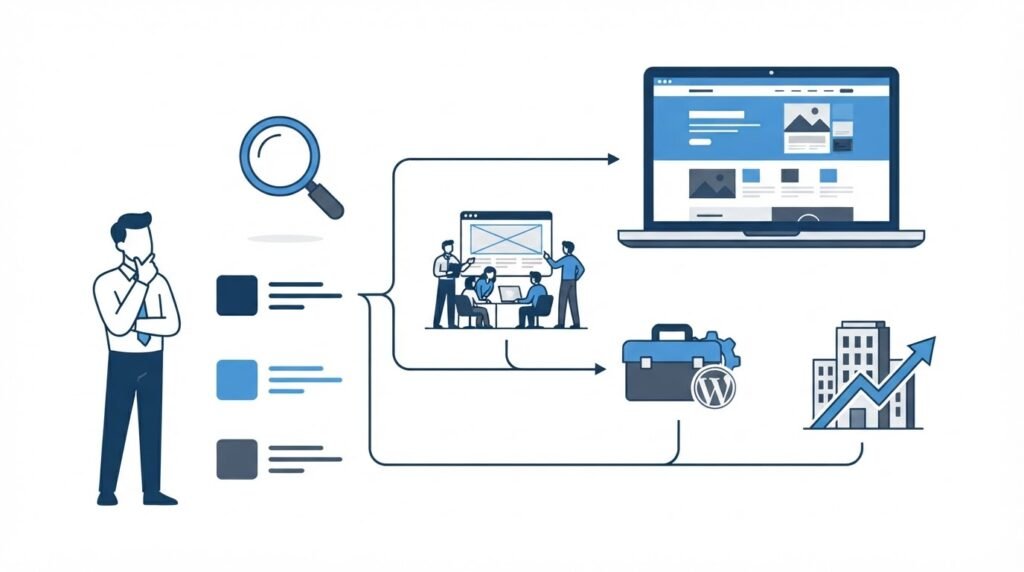
Use this workflow before signing a proposal:
- Define the business outcomes, audiences, required integrations, and internal owners.
- Review the agency’s technical work, including performance, accessibility, security, and custom functionality.
- Ask for its discovery, design, development, quality assurance, and launch process.
- Test its integration plan for CRM, marketing, ecommerce, multilingual, and third-party systems.
- Confirm who owns the code, content, licenses, hosting access, and documentation.
- Review the maintenance plan, response process, update policy, and roadmap after launch.
Define the website requirements before contacting a WordPress development agency
Start with a short requirements brief. It gives every agency the same business context and makes proposals easier to compare. Include the site’s purpose, primary audiences, conversion actions, content responsibilities, integrations, languages, compliance needs, and launch constraints.
A useful brief also separates launch requirements from later phases. For example, a manufacturer may need a product catalogue, distributor enquiry form, HubSpot lead routing, English and Spanish pages, and a resource library at launch. A dealer portal can sit in a later phase if it has no bearing on the first launch.
Consider a fictional industrial equipment manufacturer, Northstar Pumps. Its current site sits at northstarpumps.com, has 450 PDF-heavy product pages, and sends form submissions to a shared inbox. The business wants a new WordPress site at the same domain with product filters, HubSpot routing, Spanish translation workflows, and better Core Web Vitals.
The first risk appeared in Northstar’s initial request for proposals: “modern website redesign.” That wording left too much room for interpretation. Once the brief identified product data fields, form routing rules, Spanish-page ownership, and PDF migration rules, agencies could estimate the real work.
Read whether your company should get a website if the project is still at the business-case stage. The decision should connect to sales, service, recruitment, or operational goals before design discussions begin.
Assess a WordPress development agency’s technical capability
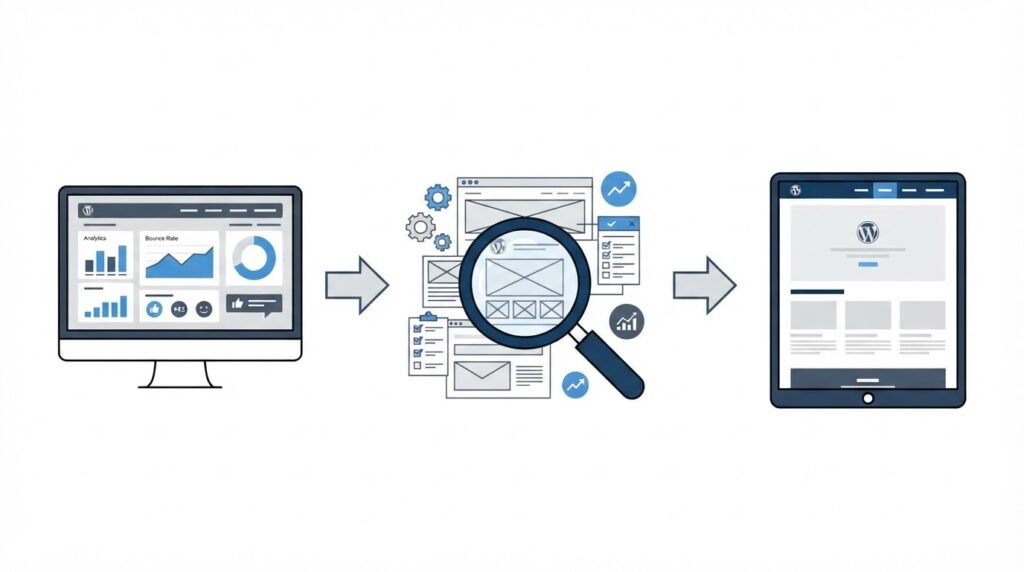
Portfolio screenshots show visual taste. They reveal very little about code quality, editor experience, page speed, or resilience under future changes. Ask an agency to explain its technical decisions in plain language, then ask for examples that relate to your requirements.
For Northstar, strong answers would cover a custom block-based editing system, structured product fields, a controlled process for product-filter logic, image optimization, caching, staging, and release testing. A generic theme with many page-builder add-ons could create a quick visual mock-up, yet it may also make product templates and multilingual updates harder to manage.
Ask these questions during technical review:
- Which parts will be custom-built, configured from established tools, or handled through plugins?
- How will editors create new pages, products, case studies, and translated content?
- How will the site meet performance and accessibility requirements?
- How will updates be tested before they reach the live website?
- Which plugins are essential, who holds their licenses, and what happens if one is retired?
- Can the team explain how its WordPress code follows WordPress coding standards?
A credible agency can also describe the trade-off between custom development and configuration. Custom functionality gives tighter control over workflows and data, while it needs clear documentation and maintenance. Established plugins can shorten delivery where their capabilities fit the requirement and their update history is sound.
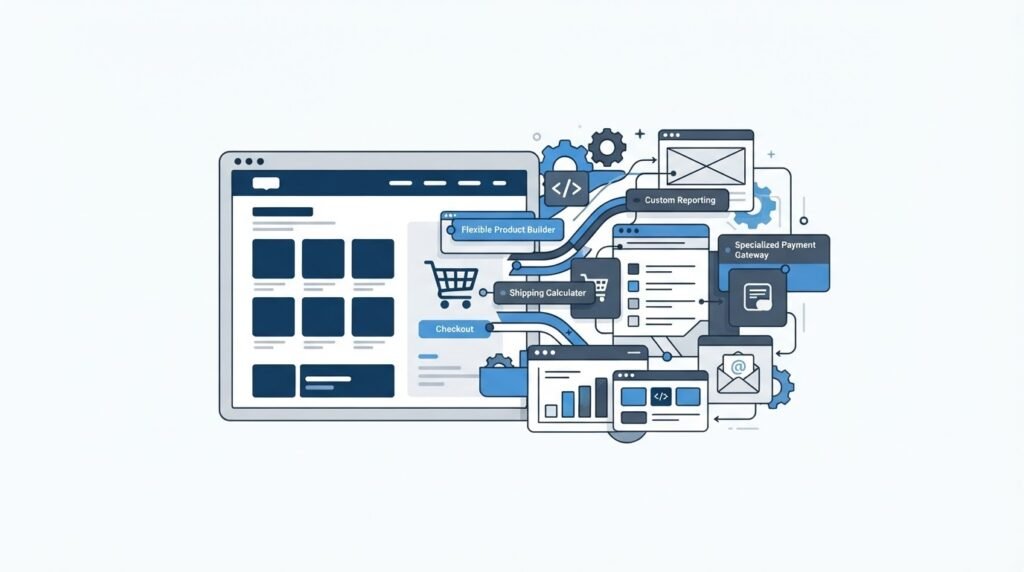
For ecommerce, ask specifically how product, order, tax, payment, fulfilment, and ERP data will move across systems. See Linzila’s WooCommerce development services for the type of implementation areas that should be scoped before a store build or redesign.
Compare the agency’s WordPress project process
A dependable project process reduces late surprises. Look for clear decision points, named responsibilities, review cycles, and acceptance criteria. “We will refine it as we go” often leaves scope, content, and launch responsibility unclear.
Northstar’s project should begin with a discovery phase that maps audiences, product taxonomy, content types, integrations, analytics, redirects, and technical constraints. Design then turns those decisions into templates and components. Development should follow approved structures rather than filling gaps with one-off page exceptions.
| Project stage | Evidence to ask the agency for | Northstar Pumps decision |
|---|---|---|
| Discovery | Sitemap, requirements, content model, integration map | Create product fields for flow rate, material, pressure, and industry |
| UX and design | Wireframes, component library, mobile states, approval process | Use one product-template system instead of separate layouts by division |
| Development | Staging site, code repository, block editor plan, test checklist | Build filters against structured product data |
| Content migration | Content inventory, redirect map, ownership matrix | Migrate high-value product pages first and redirect retired PDFs |
| Launch | Backup, DNS plan, analytics checks, rollback plan | Validate HubSpot forms and Spanish URLs before DNS change |
| Post-launch | Monitoring, update cadence, support route, improvement backlog | Review search terms and form quality after the first 30 days |
Ask who attends each stage. A project manager, designer, developer, content lead, and client-side decision-maker each have different responsibilities. Projects drift when feedback reaches developers through several layers or when nobody owns source content.
Ask for the quality assurance checklist too. It should cover major browsers, mobile layouts, forms, permissions, broken links, redirects, analytics, backups, and performance checks. Google’s PageSpeed Insights documentation explains the field and lab performance signals many teams use during this review.
Check integrations and custom WordPress functionality early
Integrations create some of the most serious project risks because they depend on systems outside WordPress. An agency needs to understand what data is sent, when it is sent, which system is authoritative, how errors are reported, and who can access the connection.
Northstar initially asked for “HubSpot integration.” That can mean several different tasks: embedding a form, passing campaign values, creating contacts, assigning leads by territory, recording consent, or syncing product enquiry details. Each has different effort and testing needs.
Have the agency document every integration with a simple map: source, destination, fields, trigger, authentication method, failure handling, and business owner. This applies to CRM, email platforms, payment providers, inventory tools, booking systems, translation services, and analytics tools.
For a multilingual site, ask how page relationships, translated slugs, editorial approvals, language fallbacks, and hreflang output will be managed. Translation affects navigation, forms, search, redirects, and support workflows. It belongs in discovery rather than the final weeks before launch.
The same principle applies to WooCommerce stores. A checkout that connects to shipping, payments, tax, inventory, and fulfilment needs end-to-end test orders across normal, failed, refunded, and out-of-stock scenarios.
Evaluate maintainability before choosing a WordPress development agency
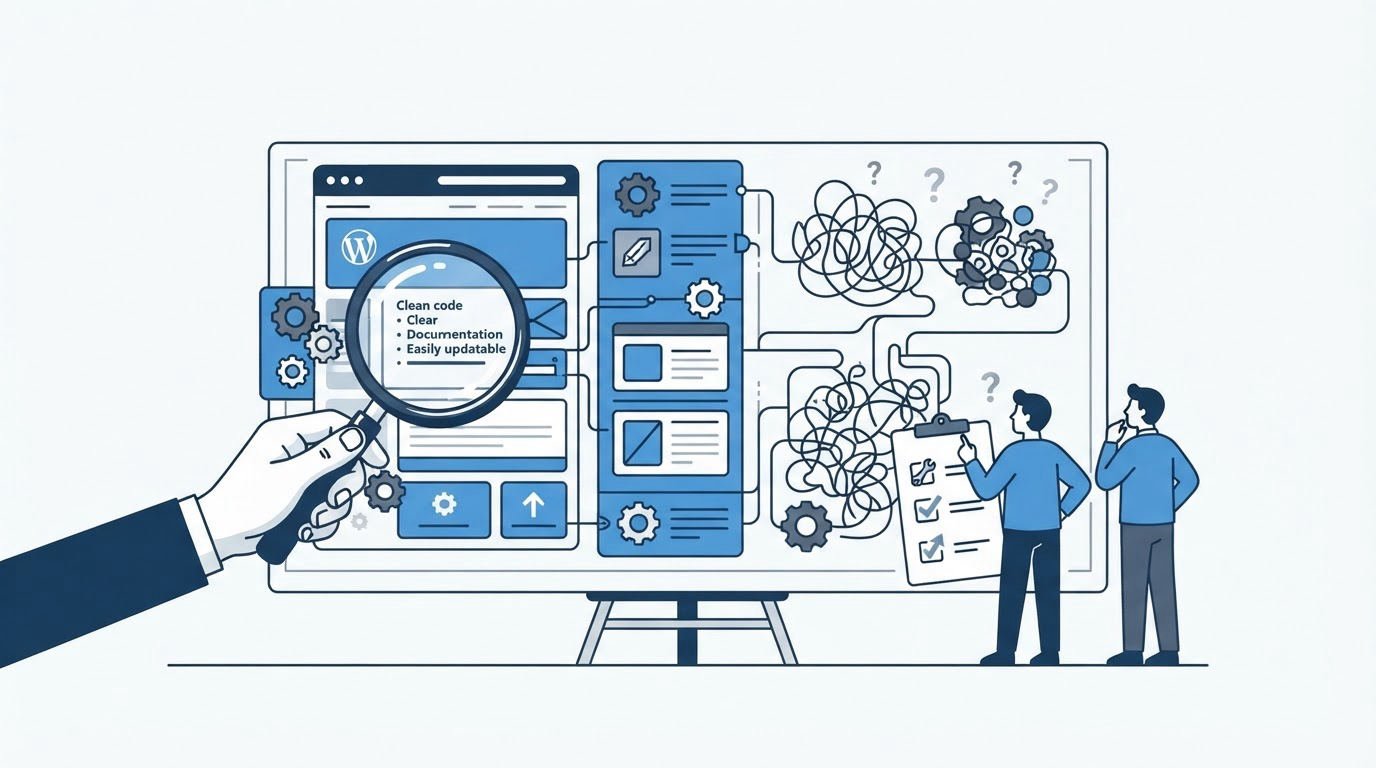
Maintainability decides how easily your team can publish pages, fix issues, add features, and change providers. Ask to see the editor experience, not only the finished front end.
For Northstar, editors should be able to create a product page using approved blocks and structured fields. They should not need to edit template code or recreate a product specification table by hand. The agency should also explain which parts of the site are intentionally restricted to protect consistency.
Confirm the following terms in the contract and handover plan:
- Ownership of custom code, designs, content, domains, hosting accounts, and analytics properties
- Access to the code repository, staging environment, backups, and plugin-license accounts
- Technical documentation for integrations, custom fields, deployment, and recovery
- Editor training for the staff who will publish and approve content
- A list of third-party dependencies and renewal responsibilities
- A process for requesting future changes and approving scope
A maintainable site has boundaries. Reusable components protect design quality, while a documented exception process handles genuine business needs. Without those boundaries, every urgent request can create another permanent variation.
Linzila’s high-performance web design approach reflects a useful selection criterion: performance work belongs in design, development, content handling, and post-launch review. It cannot be reliably added through a single late optimization pass.
How Linzila supports the work after agency selection
A business choosing Linzila can move from requirements into a structured build and support path. The work starts by turning business goals into pages, components, content responsibilities, and technical requirements. That step gives custom functionality and integrations a defined place in the scope.
Next, the build focuses on a website that supports the planned user journeys and the team responsible for content. For a Northstar-style project, that means establishing product templates and filtering rules before migrating hundreds of product pages. HubSpot form behavior, Spanish URL rules, and redirects are then tested in staging against the agreed specification.
Before launch, the team reviews the operating details that frequently cause disruption: form delivery, analytics, redirects, mobile behavior, performance, access credentials, and recovery arrangements. After launch, website maintenance and technical support provides a route for updates, issue handling, and planned improvements.
This approach suits companies that need a capable site and a clear operating model afterward. It also gives internal teams a documented basis for approving future work.
Review long-term WordPress support and maintenance
Every WordPress site needs ongoing attention. Core updates, plugin releases, security issues, content changes, PHP compatibility, browser changes, and third-party API changes all affect the operating site.
Ask each agency how support is organized. Get a written answer on response windows, severity levels, update frequency, backup retention, monitoring, staging tests, and the route for emergency issues. Clarify whether support includes a fixed allocation of improvements or only break-fix work.
WordPress publishes security updates and release information through its official project channels. Your agency should have an established way to assess and apply those changes, including the WordPress hardening guidance relevant to your hosting and access setup.
For Northstar, the first post-launch review should inspect search terms, form submissions, product-page exits, page performance, and editor feedback. One likely improvement may be adding a required industry field to the enquiry form after sales reports that generic submissions take too long to qualify. A maintenance relationship gives that change a route from observation to tested release.
Common mistakes when choosing a WordPress development agency
The lowest proposal can omit discovery, migration, testing, documentation, or support. Compare scope line by line before treating estimates as comparable.
Another common failure is approving design before content and data requirements are known. Northstar’s product filters depend on complete product attributes. A polished page layout cannot repair missing or inconsistent source data.
Avoid relying on verbal assurances for ownership and post-launch support. Put access, licenses, response expectations, and handover deliverables in the agreement.
Finally, avoid treating the agency relationship as finished on launch day. Schedule a post-launch review and maintain a prioritized improvement backlog from the beginning.
FAQ about choosing a WordPress development agency
What should I ask a WordPress development agency before hiring them?
Ask how the agency handles discovery, custom functionality, integrations, performance, accessibility, content migration, testing, launch, documentation, ownership, and ongoing support. Ask for examples tied to your specific requirements rather than broad capability claims.
How do I compare WordPress agency proposals fairly?
Give each agency the same written brief, then compare deliverables, assumptions, exclusions, timeline, team roles, third-party costs, testing, migration, training, and support. Flag any proposal that uses broad terms such as “integration” or “SEO setup” without defining the actual work.
Should a business use custom WordPress development or a prebuilt theme?
The right choice depends on the site’s content model, workflows, branding needs, integration requirements, and expected changes. A prebuilt theme can fit straightforward brochure sites. Custom development often suits businesses with structured content, complex user journeys, or requirements that would otherwise depend on many unrelated extensions.
Does a WordPress agency need to provide maintenance after launch?
Ongoing maintenance gives the business a planned route for updates, security work, compatibility checks, backups, and improvements. Some internal teams can handle these tasks, provided they have the required access, technical capability, and documented processes.
How long should WordPress development support last?
Support should cover the launch stabilization period and continue for as long as the website remains a live business system. Agree on the support model before development starts, including emergency handling and planned enhancement work.
If your business needs a custom WordPress site with a clear build process and long-term technical support, contact Linzila with your requirements, current website URL, and required integrations. Read next: WordPress Website Redesign Services: What to Review Before Rebuilding. Read next: Custom WooCommerce Development: When Standard Plugins Are Not Enough.